Agras T30: Branch-Targeting Technology and Orchard Spraying
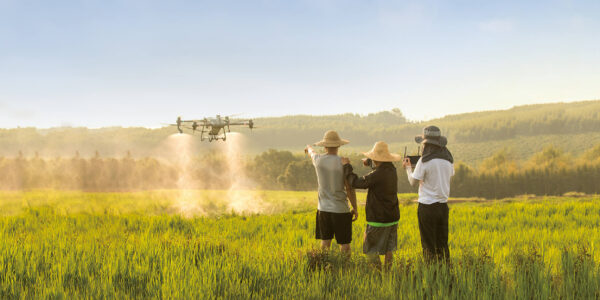
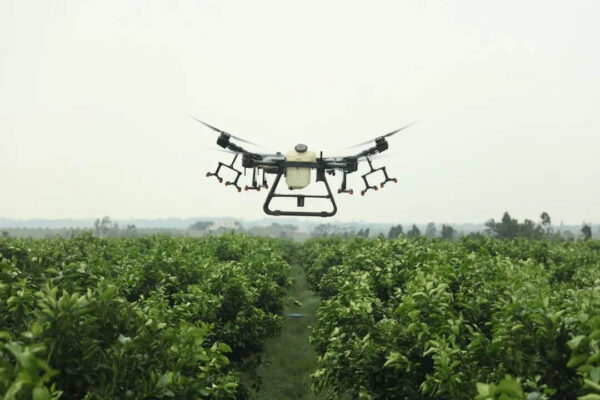
Protecting orchards and fruit trees from pests and diseases is a crucial aspect of fruit farming. Effective plant protection requires precision application of pesticides in the right amount, at the right time, and in the right place. However, traditional methods of spraying can be labor-intensive, time-consuming, and can result in environmental damage. It can also be challenging to reach the tops of trees, and to provide your orchards with comprehensive coverage. The Agras T30, a crop spraying drone, offers an answer to the challenges of spraying fruit trees, ensuring rapid and precise coverage, minimal drift, and digital orchard management capabilities. Just How Effective Are Drones at Spraying Orchards? If you haven’t seen it done, you might have some reservations about using drones for fruit tree spraying. “Can the thick canopy layer be penetrated?” “Are the backs of leaves sprayed?” “How good is the spraying effect?” These are some common questions we hear when it comes to newcomers to spraying drones. This blog will focus on the unique benefits of the Agras T30 and why it’s the perfect solution for spraying orchards and fruit trees. Orchard Spraying Field Test In a field test, the Agras T30 demonstrated its highly effective results, ensuring high-quality and abundant yields for farmers. During our experiment, we strategically placed water-sensitive paper at 48 points within a fruit tree to assess the coverage of both the Agras T30 and T20 drones. Traditional plant protection methods typically utilize “upward targeting” or “downward targeting”, with difficulty penetrating the thick canopy of fruit trees. The T30’s Branch-Targeting technology presents a novel solution to this challenge. Branch-Targeting put simply, is a technique that targets the spray directly to the leaves, following the direction of the branches. This ensures that spray droplets reach wherever the leaves are, providing comprehensive coverage. This approach significantly enhances the amount of liquid reaching the underside of the leaves and the lower part of the canopy. The T30 can also transform by adjusting the elevation angle of its No. 1 and No. 4 arms and replacing the general spray bar and sprinkler kit with a fruit tree-specific kit. This modification results in a branching wind field that directs droplets to follow the growth pattern of fruit tree branches, navigating gaps between branches and leaves. The angled approach faces fewer obstacles, allowing the spray to penetrate overlapping foliage and ensuring uniform application from top to bottom, and in all directions. Official test data reveal that T30’s Branch-Targeting technology doubles the application rate on the underside of the bottom leaves of fruit trees. TX-VK4 Sprinkler Nozzles Minimize Drift Seasoned practitioners understand that droplet size significantly impacts the effectiveness of spraying, considering factors such as settlement and evaporation. If the droplets are too small, they evaporate quickly, whereas larger droplets struggle to penetrate the dense canopy of fruit trees. To optimize this process, the T30 teams up with the hollow cone TX-VK4 sprinkler specifically designed for fruit tree spraying. Unlike fan sprinklers, these ceramic hollow cone nozzles generate a narrower particle size spectrum (110-130 microns). This production of a higher quantity of droplets that satisfy the same settling parameters makes them an ideal fit for operations involving fruit trees. This superior sprinkler, combined with the branching targeting technology, enables stronger penetration and more uniform distribution of fog droplets. The branching wind field creates a droplet maze, ensuring the liquid solution is locked in and not wasted, leading to higher pesticide utilization. With this system, more accurate pesticide usage can be achieved, effectively conserving liquid, reducing costs, and protecting the environment. Digital Orchard DJI Agriculture has progressively mastered the challenges of fruit tree operations. This has led to a more comprehensive refinement of their digital agricultural solutions. When connected to the Smart Agriculture Cloud Platform, the T30 is capable of creating a three-dimensional cloud map of the orchard, and generating intelligent flight routes through its AI system. What this means is that even complex orchard plant protection spraying can be efficiently managed by one drone. This solution presents an effective, easy-to-use method that promises high-quality results. So, with the DJI agricultural plant protection drone in hand, the future looks bright for the modern farmer. Conclusion The Agras T30 is revolutionizing the agricultural industry with its advanced features and technologies that make it the best choice for efficient and effective plant protection. With the benefits of Branch-Targeting technology, minimal drift, and digital orchard management, the Agras T30 has proven to be a smart investment for farmers. The level of precision it offers considerably saves pesticide and labor costs while enhancing orchard management, resulting in high-quality and high-yield harvests while minimizing environmental impact. Adopting the Agras T30 could fundamentally change the face of fruit farming, explicitly helping farmers face the challenges of creating a sustainable, environmentally friendly future with efficient use of resources.