DJI Agriculture Signs a Smart Agriculture Partnership Agreement with Syngenta Japan

Cooperative Upgrade! DJI Agriculture Signs a Smart Agriculture Partnership Agreement with Syngenta Japan

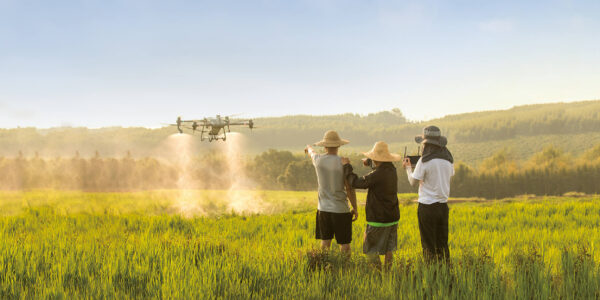
Recently, DJI Agriculture signed an agreement with the well-known agricultural company Syngenta Japan. The two companies will conduct a series of cooperative projects in Japan, focusing on smart agriculture technology R&D and other areas. Japanese agriculture is facing serious challenges, including a shortage of labor caused by a decline in fertility and an aging population. In order to address these issues, the Japanese government’s Council for Promotion of Regulatory Reform relaxed many restrictions on pesticide spraying by multi-rotor agricultural drones. At the same time, the Ministry of Agriculture, Forestry and Fisheries is expanding the types of pesticides that can be sprayed from multi-rotor agricultural drones.   In 2016, DJI Agriculture officially entered the Japanese market, becoming the first foreign company to be certified by the Japan Agriculture and Fisheries Association. Currently, DJI accounts for nearly 60% of the Japanese market for multi-rotor agricultural drones and has already trained 2,500 drone operators (as of March 2019). In the Japanese agricultural field, the use of multi-rotor agricultural drones is rapidly spreading, and relevant government departments are mandating higher requirements for the safety performance of agricultural aircraft. In order to better achieve safety and reliability in the agricultural drone and pesticide fields, DJI Agriculture will work with Syngenta Japan to develop safe spraying technical standards and education courses for multi-rotor agricultural drones in Japan. They will also conduct tests on drone-based aerial application and R&D on smart agriculture technologies.   Syngenta Japan president Minoru Matoba expressed his high expectations for DJI agricultural drones: “In addition to agricultural applications, agricultural drones can be used to care for non-editable plants, such as for golf course maintenance. Through our bilateral cooperation, we will use the effective spray technology and remote sensing technology provided by agricultural drones to promote the development of smart agriculture in Japan. ”   In addition to creating courses and developing new technologies, DJI Agriculture and Syngenta Japan will work together to develop new markets and create all-new business models. Director Wu Tao of DJI’s Japan branch said, “The effective spray performance of agricultural drones required the cooperation of pesticide companies. By combining Syngenta’s agricultural technology and DJI’s drone technology, we hope to improve the safety, reliability, and sustainability of agriculture drone solutions in Japan and throughout the world.  ”   Going forward, DJI Agriculture and Syngenta Japan will work together to promote the combined application of agricultural drones and smart agriculture in Japan.

How Far Can DJI Agricultural Drones Fly?

How Far Can DJI Agricultural Drones Fly?

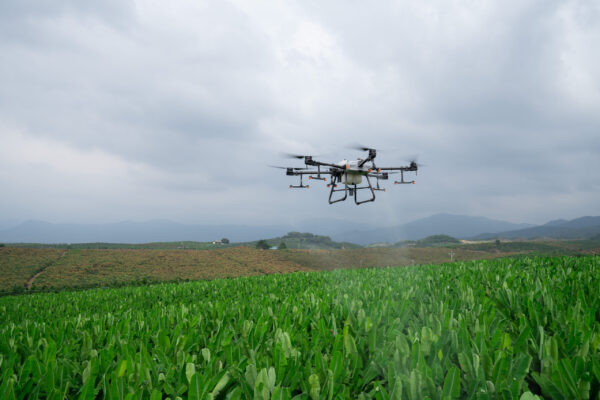
Latin America, located in the southern part of the Western Hemisphere, is the farthest region from China. With superior production conditions and rich agricultural resources, it is considered the “granary of the world” for the 21st century. As a natural extension of the Maritime Silk Road, China has developed closer relations with Latin American countries under the Belt and Road initiative, and broad agricultural cooperation between the two regions looks promising: Brazilian coffee, avocados from Mexico, Cuban sugar, and many other Latin American agricultural products are now common in Chinese homes. However, many people do not realize that cutting-edge Chinese aerial application technology is starting to see widespread application in Latin American agriculture, quietly influencing the development of agricultural science and technology in the region.   In 2016, DJI Agriculture officially entered the Latin American market. To date, agricultural drones from DJI agriculture are already used on over 2.6 million acres of Latin American farmland. They are used for the cultivation of coffee, sugarcane, melons, corn, and other crops all over South America, Central America, and the Caribbean. Intelligence Raises the Quality of Specialty Coffee Located in the eastern part of South America, Brazil is the world’s largest coffee producer, accounting for a third of global coffee production. Its terrain of rolling hills and pleasant climate make the coffee from Minas Gerais in southern Brazil famous throughout the world.   In recent years, insects and plant diseases, such as coffee rust, have affected coffee production, increasing the demand for pesticide spraying on coffee plantations. However, specialty coffee plantations are often located on steep slopes, making manual pest control and other traditional methods difficult.   In 2018, DJI Agriculture’s Agras MG-1P agricultural drones began to be used on Brazilian coffee plantations, bringing the power of technological innovation to the centuries-old coffee industry. When attacked by coffee rust, the drones flew into action, bringing new life to the old plantations. Precision Prevents Contamination While Protecting Crops In contrast to the difficult terrain of Brazilian coffee plantations, banana plantations in Ecuador face the problem of environmental contamination due to traditional crop protection methods.   Ecuador is the world’s largest exporter of bananas. As banana trees grow to about 5 meters in height, manual spraying is of limited effectiveness. Therefore, plantations often used fixed-wing aircraft.   However, as most banana plantations are near rivers or residential areas, it is hard for fixed-wing aircraft to spray pesticides without the risk of contaminating the local area, resulting in a great deal of environmental contamination to rivers and other bodies of water.   In order to address the problem of river pollution, the Ecuadorian government called for the use of drones for more precise aerial application. Currently, DJI Agriculture’s Agras MG-1P RTK agricultural drones are used with local single-rotor aircraft, providing a precise solution for banana plantations and effectively reducing river pollution. Sugar Means Job for Low-income Countries El Salvador, located in the north of Central America, is one of the smallest countries in the world. Its domestic economy is dominated by agriculture, particularly sugarcane and cotton. Due to the country’s weak industrial economy, incomes in El Salvador are generally low, and there is little investment in agricultural technology.   As China develops increasingly close economic and trade relations with El Salvador, it has begun to export agricultural technology to the country. In 2019, agricultural drones from DJI technology officially began operating in El Salvador.   Currently, DJI is working with partners in El Salvador to establish specialized agricultural service companies in order to train drone operators. This will stimulate the prosperous growth of the crop protection industry for sugarcane and other local crops. Hard Work Is Necessary for Precision Agriculture In addition to using efficient equipment to serve resource-rich Latin American countries, DJI Agriculture continuously promotes local talent development and technical training in order to lay a foundation for high-quality services.   Currently, DJI Agriculture has already established a complete aftersales and user training system in Latin America. This system trains users in everything from theoretical knowledge to drone operation to complete workflows. By adapting measures to local conditions, DJI is able to tailor its high-quality aerial application solutions to the needs of Latin American farmers.   In September 2019 alone, DJI Agriculture held dozens of in-person training sessions in Mexico, Peru, Honduras, and other countries, attracting an increasing number of young professionals.   The Belt and Road initiative represents a major development opportunity for Latin America and also provides a platform through which China can export agricultural technology to the region. Advocating the principle of mutually beneficial partnerships, DJI Agriculture wishes to use its aerial application technology to promote and improve the application of agricultural technology in Latin America. This will create new opportunities for the development of Latin American agriculture and promote the healthy development of Sino-Latin American cooperation in agriculture.   In the past, our ancestors sailed across the sea along the Maritime Silk Road. In the future, DJI Agriculture will again take to the seas with a new blueprint for the development of precision agriculture in Latin America.

Agricultural Drone Industry Insight Report (2021)

I. Industry background (I) From “plant protection drones” to “agricultural drones” As early as 1987, Japan developed the world’s first plant protection drone, selling them in limited quantities the following year. Of the nearly 5 million hectares of arable land in Japan today, over 20% uses plant protection drones to control pests and weeds. Drones have become an important plant protection technology measure in Japan. China’s plant protection drones began to develop in 2007, and in 2010, the 3CD-10 single-rotor gasoline-powered plant protection drone produced by Wuxi Hanhe Aviation was exhibited for the first time at the National Agricultural Machinery Expo. This was the first drone of its kind sold in China, opening the first step of commercializing plant protection drones in the country. In 2012, DJI applied the world’s superior drone technology to agriculture and founded DJI Agriculture in 2015 with the release of the MG-. In 2015, XAG released its plant protection drones and established XAG Agricultural Services. Today, several drone companies are dedicated to providing users with agricultural solutions based on drone technology to drive innovation and progress in global agriculture. With the rapid development of plant protection drones, smarter products have been created to serve a wider range of needs and applications. In addition to spraying pesticides, plant protection can also spread fertilizer, seeds, and feed. As a result, the term “plant protection drone” is gradually being replaced by the broader term “agricultural drone.” Figure 1: Agricultural drones make up the future farm 2021 was a year of rapid development of agricultural drones worldwide, which is a quantitative leap compared to 2020 in terms of the total number of drones and operating areas. Drones are particularly suitable for scenarios where it is difficult to get down to the ground with manual and ground machinery, such as paddy fields, tall straw crops, and mountainous terrain. In Southeast Asia, where rice is a staple crop, drones are gaining recognition from more and more farmers. Operations have grown rapidly, as agricultural drones are suitable for sowing rice fields and controlling pests throughout the crop growth cycle. The application of agricultural drones in flat farmland such as wheat and rice is quickly gaining popularity, and with the continuous improvement of technology, the application has been expanded in complex scenarios such as hilly mountain orchards. Figure 2: Global holdings of DJI agricultural drones In Europe, many vineyards have steep mountainous terrain where ground machinery is not available, so most work is done by hand, with high labor and time costs. In Hallau, in the canton of Schaffhausen in northern Switzerland, the preservation of traditional farming practices also poses a challenge for efficient management of local vineyards. To ensure yields, vineyard managers spray pesticides every season. Previously, this work was mainly done manually by hired workers in an inefficient, physically demanding process. The growing season typically required 8-10 sprays, each of which took more than 10 days, and if not sprayed in a timely manner, grape mold could affect a season’s wine production and harvest, but also vineyard income for years to come. Figure 3: Agricultural drone spraying operation in the mountains of Switzerland Hallau is located in the mountainous northern region, whose terrain was challenging for ground-based vehicles. On some steep slopes, a vehicle can easily tip over, threatening the driver’s safety. The invocation of drone management to maintain the original ecology of the vineyard to the maximum extent is a new attempt to integrate the traditional culture of the local vineyard with modern technology. This was also the first time that Chinese intelligent agricultural equipment entered the local agricultural production in Switzerland. Figure 4: Agricultural drones operating in Swiss mountain vineyards (II) Key concerns for industry development​ 1. Regulation and policy Agricultural drones, as the name implies, are drones used in agriculture. Their purpose places them in the category of agricultural equipment, which is managed by the agricultural department; when it sprays pesticides, it has potential environmental risks, which are managed by the environmental protection department. At the same time, their operational attributes belong to the aircraft category and is managed by the civil aviation authority. This characteristic of agricultural drones, which is managed by multiple authorities, leads to the fact that laws and policies play an important role in the development of the industry. The management of agricultural drones as agricultural equipment is a common method all over the world, while each country’s management methods differ by some degree. Some countries adopt compulsory certification, some apply for simple written materials, while others use administrative authorization. Nevertheless, it represents the Ministry of Agriculture’s management and approval of agricultural drones. As a kind of aircraft, an agricultural drone is managed by civil aviation authorities of various countries in its operation. There are three common ways of management. The first is to exempt agricultural drones with low-risk operations in the existing legal system, such as the United States. The second is to require drones above 25 kg to carry out a Safe Operation Risk Analysis (SORA). This assessment focuses on operational risk and analyzes and approves the operational risk of individual cases, which is widely used in European countries. The third is to simplify the airworthiness rules of traditional aircraft and generate a simplified version of airworthiness requirements that apply to agricultural drones, such as Brazil, Mexico, and other countries. Agricultural drones are mainly used for pesticide spraying, so the management of pesticides has become the third policy direction to pay attention to. In Japan, for example, the management agency of pesticide preparations for drones is the Agriculture, Forestry and Fisheries Aviation Association. Japan has 382 pesticide formulation registered for agricultural drones.[1] Pesticides registered in Japan for agricultural drones include fungicides, insecticide mixtures, herbicides, and plant growth regulators, and registered crops are mainly rice, wheat, soybeans and so on. Herbicides are only registered in rice fields, and the pesticide forms registered in rice fields are mainly granules and film oil. The application method is to use drones to spread particles and…

Нов законопроект ще разреши пръскането с дронове в земеделието

New bill will allow drone spraying in agriculture

Soon in Bulgaria it will be possible to use drones for spraying pesticides and fertilizers in agriculture. This provides for a bill to amend the Plant Protection Act. Bulgaria is at the forefront of countries where such a law will be adopted. The bill aims to align Bulgarian legislation with European regulations that regulate the requirements for placing on the market and production of plant protection products and fertilizing products. Also, the project addresses the issue of using unmanned aerial vehicles (drones) for agricultural activities related to plant protection and the use of plant protection products through these new technologies. Part of the conditions for permitted drone spraying will be: Certificate of conformity issued; Shade temperature lower than or equal to 25° C; Wind speed from 1 to 5 m/s; Air humidity higher than 50 percent, etc. The height from which plant protection products are spread is many times smaller in the case of the drone, than in the case of aerial spraying, which is carried out by plane or helicopter. This, in turn, significantly reduces the drift of the drone jet, respectively reduces both the amount of plant protection products needed to achieve an optimal result, and also the possibility of pesticides falling outside the areas designated for treatment, i.e. in bordering territories, water basins, forests, etc. Using drones to spray pesticides and fertilizers will have a number of benefits for farmers and the environment. Drones will allow for more precise and efficient application of preparations, which will lead to a reduction in costs, an increase in yields and preservation of soil fertility. Drones will also help reduce the effects of pesticide use on human and animal health, as well as reduce water and air pollution. The draft law to amend and supplement the Plant Protection Act is open for public discussion until March 15, 2024. All interested parties can express their opinion and give their suggestions on the draft law. Motives The proposed regulatory changes are aimed at solving a major problem related to the possibility of using unmanned aerial vehicles (drones) for activities in agriculture related to plant protection and the use of plant protection preparations through the use of these new technologies. The Plant Protection Act (PPA) regulates two types of spraying – aerial and ground. Unmanned aerial vehicles (drones) cannot be assigned to either of these two types, which creates a gap in the existing legal framework regarding the use of plant protection products. Through these new technologies, a reduction of the harmful consequences of the use of pesticides is ensured and an opportunity to develop the so-called precision agriculture is provided, the ultimate goal of which is the use of the most sparing methods and technologies, allowing the achievement of plant protection goals and at the same time reducing the quantities of pesticides used, respectively their harmful effects. The goals that the EU sets within the framework of the Green Deal are related to promoting precision agriculture and reducing the amount of plant protection products used. The use of drones to spray pesticides ensures that these goals are achieved. This is due to the extremely precise technology that is used for the purpose. A study carried out in late 2021 and funded by the European Commission, related to the evaluation of Directive 2009/128/EC and its possible revision, concluded that no derogation would be necessary for drone spraying, as well as any other kind spraying if the spraying tool is no more than 2 meters from the plant being treated. Unlike aerial spraying, for which European legislation has introduced a ban and left it to Member States to define the procedures for allowing exceptions to this ban, drone spraying has a number of advantages, namely: The height from which plant protection products are sprayed is many times smaller with a drone than with aerial spraying, which is carried out by airplane or helicopter. This, in turn, significantly reduces the drift of the drone jet, respectively reduces both the amount of plant protection products needed to achieve an optimal result, and also the possibility of pesticides falling outside the areas designated for treatment, i.e. in bordering territories, water basins, forests, etc. The technical characteristics and capabilities of drones intended for use in agriculture allow the treatment of only part of the plants (e.g. infected outbreaks), which helps to limit the areas on which pesticides are used and the rapid limitation of plant infections. Compared to ground spraying, which is carried out up to about 1.5 meters above the plants, and when treating orchards sometimes up to 7 meters high, drone spraying allows optimal treatment of the plants from a distance of 2 meters above the treated plants, practically leveling them with spraying by ground agricultural equipment, but at the same time the pressure that the drone provides allows for a much more efficient spraying of all parts of the plant, including the lowest, and using smaller amounts of plant protection products, making the treatment with a drone many times more efficient and at the same time more sparing not only than aerial spraying, but also the ground one. The advantages of using a drone to process plants and plant protection products are even more tangible when spraying fruit trees. In these crops, the ground spraying directs the jet upwards and in order to maximally treat all parts of the crown of the tree, it is necessary to create a much stronger jet, respectively the use of a larger amount of pesticides, which is very effectively avoided when using a drone. This is because of the precise technology used in the drones, such as the ability to recognize the crowns, allowing the jet to be precisely directed, hovering directly over the plants / trees, creating pressure that directs the jet where it is needed, namely into the crowns of the trees, limiting the unnecessary spreading of pesticides affecting neighboring territories. Other advantages of spraying with a drone derive from the technical capabilities of the implemented technological…

Agras T30: Branch-Targeting Technology and Orchard Spraying

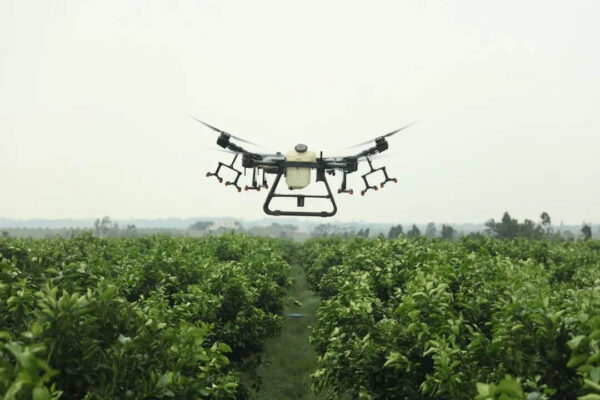
Protecting orchards and fruit trees from pests and diseases is a crucial aspect of fruit farming. Effective plant protection requires precision application of pesticides in the right amount, at the right time, and in the right place. However, traditional methods of spraying can be labor-intensive, time-consuming, and can result in environmental damage. It can also be challenging to reach the tops of trees, and to provide your orchards with comprehensive coverage. The Agras T30, a crop spraying drone, offers an answer to the challenges of spraying fruit trees, ensuring rapid and precise coverage, minimal drift, and digital orchard management capabilities. Just How Effective Are Drones at Spraying Orchards? If you haven’t seen it done, you might have some reservations about using drones for fruit tree spraying. “Can the thick canopy layer be penetrated?” “Are the backs of leaves sprayed?” “How good is the spraying effect?” These are some common questions we hear when it comes to newcomers to spraying drones. This blog will focus on the unique benefits of the Agras T30 and why it’s the perfect solution for spraying orchards and fruit trees. Orchard Spraying Field Test In a field test, the Agras T30 demonstrated its highly effective results, ensuring high-quality and abundant yields for farmers.   During our experiment, we strategically placed water-sensitive paper at 48 points within a fruit tree to assess the coverage of both the Agras T30 and T20 drones. Traditional plant protection methods typically utilize “upward targeting” or “downward targeting”, with difficulty penetrating the thick canopy of fruit trees. The T30’s Branch-Targeting technology presents a novel solution to this challenge. Branch-Targeting put simply, is a technique that targets the spray directly to the leaves, following the direction of the branches. This ensures that spray droplets reach wherever the leaves are, providing comprehensive coverage. This approach significantly enhances the amount of liquid reaching the underside of the leaves and the lower part of the canopy.   The T30 can also transform by adjusting the elevation angle of its No. 1 and No. 4 arms and replacing the general spray bar and sprinkler kit with a fruit tree-specific kit. This modification results in a branching wind field that directs droplets to follow the growth pattern of fruit tree branches, navigating gaps between branches and leaves. The angled approach faces fewer obstacles, allowing the spray to penetrate overlapping foliage and ensuring uniform application from top to bottom, and in all directions.   Official test data reveal that T30’s Branch-Targeting technology doubles the application rate on the underside of the bottom leaves of fruit trees. TX-VK4 Sprinkler Nozzles Minimize Drift Seasoned practitioners understand that droplet size significantly impacts the effectiveness of spraying, considering factors such as settlement and evaporation. If the droplets are too small, they evaporate quickly, whereas larger droplets struggle to penetrate the dense canopy of fruit trees.   To optimize this process, the T30 teams up with the hollow cone TX-VK4 sprinkler specifically designed for fruit tree spraying. Unlike fan sprinklers, these ceramic hollow cone nozzles generate a narrower particle size spectrum (110-130 microns). This production of a higher quantity of droplets that satisfy the same settling parameters makes them an ideal fit for operations involving fruit trees. This superior sprinkler, combined with the branching targeting technology, enables stronger penetration and more uniform distribution of fog droplets. The branching wind field creates a droplet maze, ensuring the liquid solution is locked in and not wasted, leading to higher pesticide utilization. With this system, more accurate pesticide usage can be achieved, effectively conserving liquid, reducing costs, and protecting the environment. Digital Orchard DJI Agriculture has progressively mastered the challenges of fruit tree operations. This has led to a more comprehensive refinement of their digital agricultural solutions. When connected to the Smart Agriculture Cloud Platform, the T30 is capable of creating a three-dimensional cloud map of the orchard, and generating intelligent flight routes through its AI system. What this means is that even complex orchard plant protection spraying can be efficiently managed by one drone. This solution presents an effective, easy-to-use method that promises high-quality results. So, with the DJI agricultural plant protection drone in hand, the future looks bright for the modern farmer. Conclusion The Agras T30 is revolutionizing the agricultural industry with its advanced features and technologies that make it the best choice for efficient and effective plant protection. With the benefits of Branch-Targeting technology, minimal drift, and digital orchard management, the Agras T30 has proven to be a smart investment for farmers. The level of precision it offers considerably saves pesticide and labor costs while enhancing orchard management, resulting in high-quality and high-yield harvests while minimizing environmental impact. Adopting the Agras T30 could fundamentally change the face of fruit farming, explicitly helping farmers face the challenges of creating a sustainable, environmentally friendly future with efficient use of resources.

New DJI Agriculture Drone Insight Report Reveals Greater Acceptance, Advanced Farming Techniques and Exploration of Best Practices for Farmers

August 31st, 2023 – DJI Agriculture, a global leader in facilitating agricultural innovation through drone technology, today reveals the findings of the DJI Agriculture Drone Insight Report 2022/23. “DJI Agriculture strives to enhance the efficiency of farmland management through digital agricultural solutions based on intelligent agriculture drones in an environmental and ecological way,” said Yuan Zhang, Head of Global Sales at DJI Agriculture. “This report shows that governments around the world and farmers, are adopting the use of agricultural drones and smart farming methods to increase food production in a more scientific, sustainable and eco-friendly way. This approach can reduce the amount of agricultural chemicals used while ensuring food security and environmental balance.” The report is split into several sections examining DJI Agriculture’s work in 2022/23, Global Policy Trends, Agriculture Drone Tests, Innovations in Drone Application and Best Practices. DJI Agriculture’s work in 2022/23 Since its inception just over ten years ago DJI Agriculture has grown over six continents, covering more than 100 countries and regions. At the end of 2022, the global number of DJI agriculture drones exceeded 200,000 units, and the cumulative operating area exceeded 200 million hectares, bringing the benefits of aerial technology to hundreds of millions of agricultural practitioners. Through flying training, a total of 150,000 agriculture drone pilots and 2,500 teachers have been trained to promote more young entrepreneurs to join the cause of science and technology agriculture and provide talent support for the development of intelligent agriculture. Global Policy Trends As agricultural drone technology is increasingly being embraced by farmers around the world, governments are starting to see the many benefits that this brings to the industry. There have been proposals to revise regulation across Europe, North America and Brazil. In China, DJI’s T16, T20, T10 and T30 agricultural drones were all issued with airworthiness certification by the CAAC. Agricultural Drone Tests A number of in-depth tests have been conducted including droplet size tests, drifting tests and herbicide tests, across the DJI Agras agricultural drone series. Innovations in Drone Application Drones have been used in a number of innovative ways from pest and disease control in the Maldives to integrating them with traditional grape farming techniques or even in smart farming, optimizing potato and rice yields. One large scale potato farmer in Washington State saw an 80% reduction in insect damage by conducting spot spraying on a 60-hectare field. In Japan a local rice producer was able to save on fertilizer and increase his yield, giving him an additional 5,425 USD per hectare. Some of the more novel use cases include pollination, shaking dead flowers from fruit trees, and spraying of antifreeze and sunscreen for fruit trees. Best Practices There are extensive discussions around the world on establishing best practices for agricultural drones, which include crew training, drone technology improvement, pharmaceutical use specifications, standard operating procedures, and safe operation guidelines. About DJI Agriculture Since 2006, DJI has led the world with civilian drone innovations that have empowered individuals to take flight for the first time, visionaries to turn their imagination into reality, and professionals to transform their work entirely. With a solution-oriented mindset and genuine curiosity, DJI has expanded its ambitions into the area of agriculture. In 2012, DJI commenced R&D of agriculture drones and in 2015 established DJI Agriculture. DJI Agriculture is committed to developing innovative, efficient and sustainable solutions to continuously improve agricultural productivity. With products servicing over 100 countries worldwide, DJI Agriculture has empowered over 10 million professional users with intelligent farming solutions.